Aswan in Winter 2027: Your Complete Travel Guide
Visit Philae Temple under cool January skies, eat Nubian tagen on Elephantine Island, and plan 3 to 4 days to cover Aswan's monuments, markets, and Abu Simbel.
Quick answer
Give Aswan 2 to 3 days in winter 2027. Philae Temple, a felucca at sunset, and a day trip to Abu Simbel cover the essentials. Temperatures sit around 23°C by day and drop sharply at night, so pack a warm layer. Eat ful, grilled fish, and Nubian stew at the Corniche market strip before the crowds arrive.
Aswan in Winter 2027: What to Expect Before You Go
Aswan in Winter 2027 offers something rare among Egypt's major cities: warm, rain-free days without summer's extreme heat. Sitting 950 km south of Cairo on the east bank of the Nile, the city records daily highs of 22 to 26°C (72 to 79°F) from November through February, with nights that can dip to around 9°C (48°F), per Weather Atlas climate data verified 2026. Pack layers for after dark, but plan full days outdoors with no disruption from rain. Aswan receives less than 1 mm of precipitation per year, making it one of the driest cities on the planet.
The city organizes itself around three distinct zones. The Corniche, running along the east bank, is the practical base: walkable, lined with ferry jetties, souq entrances off Sharia as-Souq, and the train station within reach. Elephantine Island, a few minutes across the water by local ferry, holds two Nubian villages, ancient ruins, and car-free guesthouses. Gharb Soheil on the west bank is the quieter alternative, suited to travelers wanting the most immersive Nubian-village experience.
Budget 3 to 5 days to cover Aswan properly. The Corniche and souq are walkable, but major sites including the High Dam, Philae Temple, and the granite quarries at the Unfinished Obelisk are spread out and require arranged transport or boat transfers. December through February is peak season; book accommodation early, especially for Nile-view rooms on the Corniche or guesthouses on Elephantine Island.
3 days in Aswan
Temples, the High Dam, and the Corniche at dusk
Cover Aswan's three iconic landmarks south of the city, then walk the riverfront at golden hour.
- 07:30
Unfinished Obelisk
Start at Aswan's granite quarries before the day heats up. A 42-metre obelisk still lies attached to bedrock; had it been completed, it would have been the largest in Egypt. Entry is EGP 220 per adult (per monkeystale.ca, August 2026). Allow 45 minutes, then negotiate a half-day taxi to continue south toward the dam and Philae — budget EGP 400 to 600 for the combined run, per roammate.com, 2026.
- 09:00
Aswan High Dam viewpoint
The dam sits 8 km south of the city center. Completed in 1970 with Soviet collaboration, it stretches 3,600 metres and created Lake Nasser, one of the world's largest reservoirs. Entry is approximately EGP 100 per adult (per egyptfortravel.com, August 2026). Spend 30 minutes on the viewpoint terrace, then head straight to the Shellal boat dock — it is less than 10 minutes by taxi from here.
- 10:00
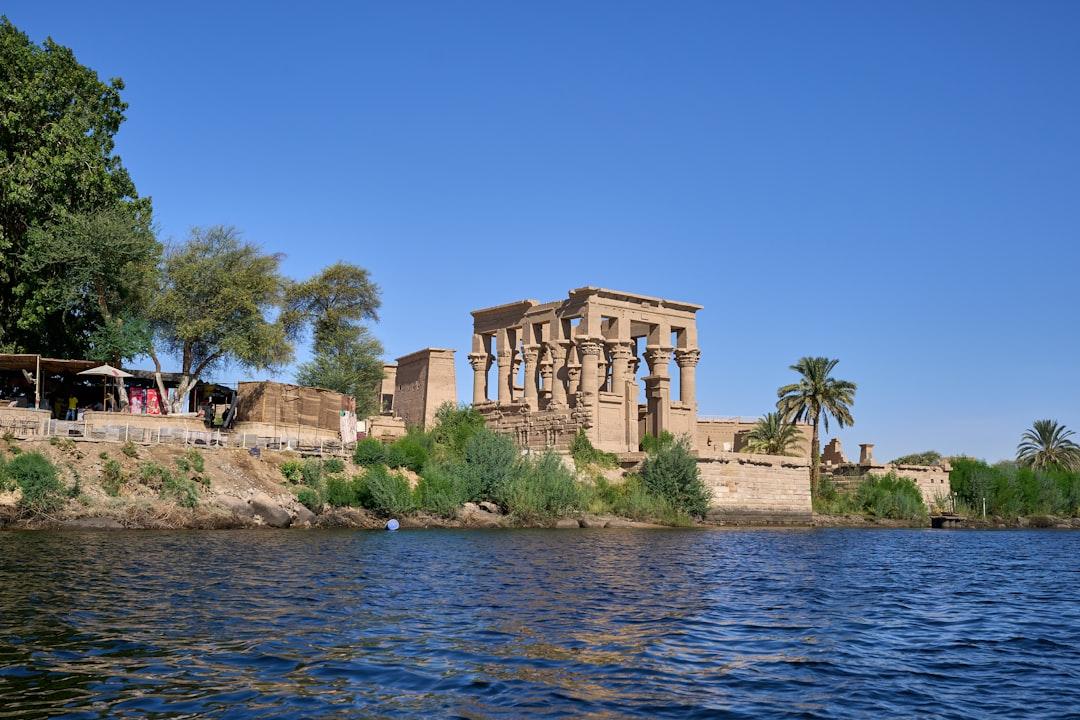
Philae Temple (Temple of Isis on Agilkia Island)
Reach the Shellal landing dock, then take a 10-minute motorboat crossing to the island. Entry is EGP 550 per adult; the shared round-trip boat is EGP 300 per boat for up to 10 people (per monkeystale.ca and semelegantvoyage.com, 2026). The temple complex closes at 15:00 in winter, so arrive by 10:00 to allow a full 2 hours inside. Note that payment at the ticket counter is by card only — no cash accepted at the gate, per nileempire.com, 2026.
- 13:30
Lunch on the East Bank Corniche
Return to central Aswan by taxi. The Corniche is a walkable riverfront strip connecting most hotels and eateries. Order samak mashwy (grilled Nile fish served with rice) or a tagine at any riverside counter spot. Traditional Nubian dishes including bamiya (okra stew) and ful medames also appear on local menus here. Budget meals in local restaurants tend to run EGP 80 to 150 per person.
- 15:30
Aswan Old Souk (Sharia As-Souq)
The souk runs about 3 km along the east bank, starting near Aswan Railway Station and a short walk from the Corniche. Stalls sell karkade (dried hibiscus flowers for EGP 10 to 20 per bag), spices, Nubian textiles, silver jewelry, and handmade crafts. Prices here are reportedly half those in Luxor and a third of Cairo, per roammate.com, 2026. Haggle on everything; the opening price is rarely the final one.
- 18:30
Sunset tea at the Old Cataract Hotel terrace
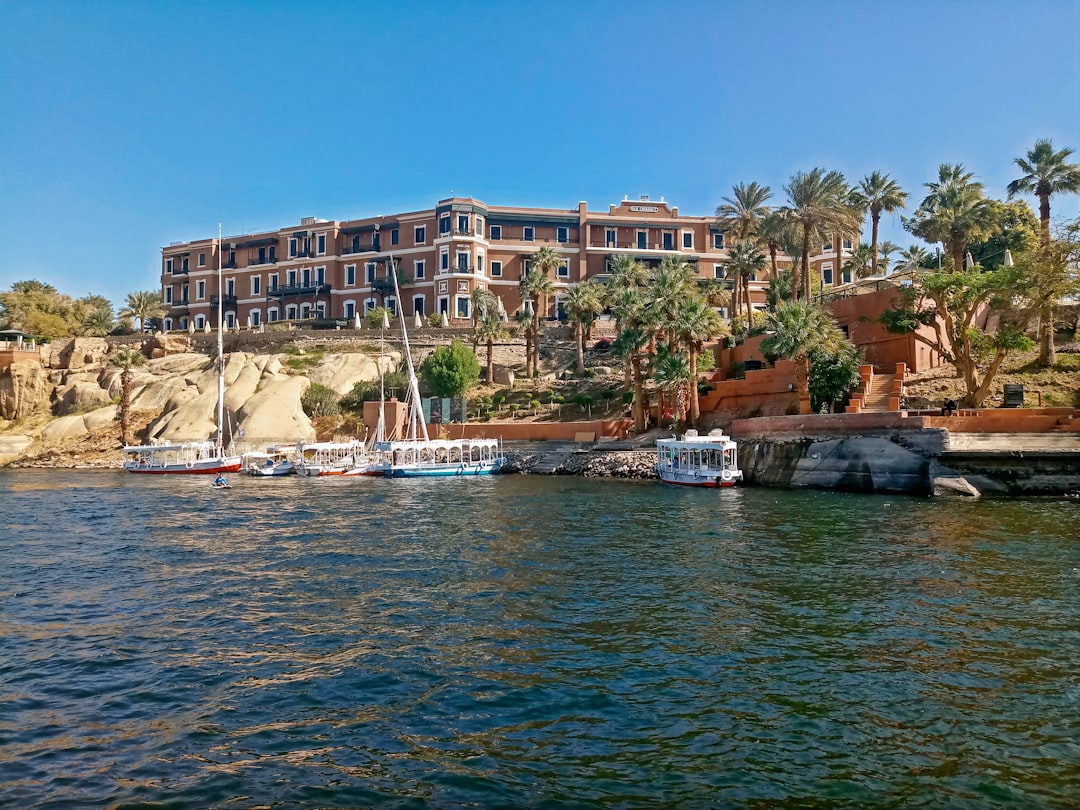
Walk 10 minutes south along the Corniche from the souk to the Old Cataract Hotel, a landmark opened in 1899 that overlooks Elephantine Island and the Nile. The terrace bar serves karkade tea and light drinks with a panoramic view. Non-guests can use the terrace; order at least one item. The evening felucca traffic on the river makes this one of the best sunset-watching spots in Aswan.
Elephantine Island, the Nubian Museum, and a sunset felucca
Cross to Aswan's oldest island, then visit the finest Nubian history museum, and sail back at dusk.
- 08:30
Ferry to Elephantine Island
Catch the public ferry from the Corniche dock near downtown Aswan. The crossing costs EGP 5 and runs every 20 minutes, 24 hours a day, per semelegantvoyage.com, 2026. Elephantine Island is a 5,000-year-old UNESCO-listed site that was once Egypt's southern frontier. The Nubian villages of Siou and Koti on the island are free to walk through; streets are narrow and painted in vivid ochre and turquoise.
- 10:30
Aswan Museum and Khnum Temple ruins
Located on the southern tip of Elephantine Island, the Aswan Museum houses artifacts from the island's pharaonic excavations, and the adjacent ruins of the Temple of Khnum and two Nilometers date back thousands of years. Allow 60 minutes for a self-guided walk. Entry to the island's archaeological zone is included in the museum ticket; confirm the current fee at the gate as prices are updated annually by the Egyptian Ministry of Antiquities.
- 12:30
Lunch at Panorama Restaurant on Elephantine Island
Panorama Restaurant sits on Elephantine Island with open rooftop seating overlooking the Nile. Order a Nubian chicken tagine or grilled fish with rice. Vegetarian options, including moloukhiya (Jew's mallow soup) and koshari (rice, lentils, pasta, and spiced tomato sauce), are typically on the menu. Meals in local island restaurants run EGP 80 to 150 per person, per roammate.com, 2026.
- 14:00
Ferry back and Nubian Museum
Return by the EGP 5 public ferry, then walk 10 minutes south along the Corniche to the Nubian Museum. The museum traces 6,000 years of Nubian history from prehistory through pharaonic and Christian eras using statues, jewelry, models, and everyday objects. Entry is EGP 200 per adult, per egyptfortravel.com, 2026. Allow 90 minutes; audio guides are available at the desk.
- 16:30
Sunset felucca on the Nile
Hire a felucca from the Corniche waterfront, a 2-minute walk west from the Nubian Museum. Feluccas are priced per boat, not per person, so recruit other travelers from your hotel to split the cost, per roammate.com, 2026. A standard 90-minute sunset circuit passes the Aga Khan Mausoleum on the west bank and loops around the southern tip of Elephantine Island. Agree on price and route before boarding.
- 19:30
Dinner: Nubian tagine and basbousa
Head to a Corniche-area restaurant for a proper sit-down dinner. Order a vegetable or chicken tagine slow-cooked in a clay pot, and finish with basbousa (semolina cake soaked in syrup) or kunafa (sweet shredded pastry with cheese). Both desserts appear on menus across Aswan's local restaurants. The Nubian House Restaurant on the Nile bank is a locally referenced option for traditional dishes in a Nubian-decorated setting.
Early convoy to Abu Simbel, back by noon
A 3-hour drive south returns Ramesses II's rock-cut temples before midday; afternoons stay free.
- 03:30
Depart Aswan for Abu Simbel
Most shared minibuses to Abu Simbel depart around 03:00 to 04:00, joining a police convoy for the 280 km desert road south. The drive takes roughly 3 to 3.5 hours. Book through your hotel the night before; shared minibus costs EGP 600 to 1,000 per person versus EGP 3,000 or more for a private vehicle, per roammate.com, 2026. Most passengers sleep during the journey and wake as the temples come into view at sunrise.
- 07:00
Great Temple of Ramesses II
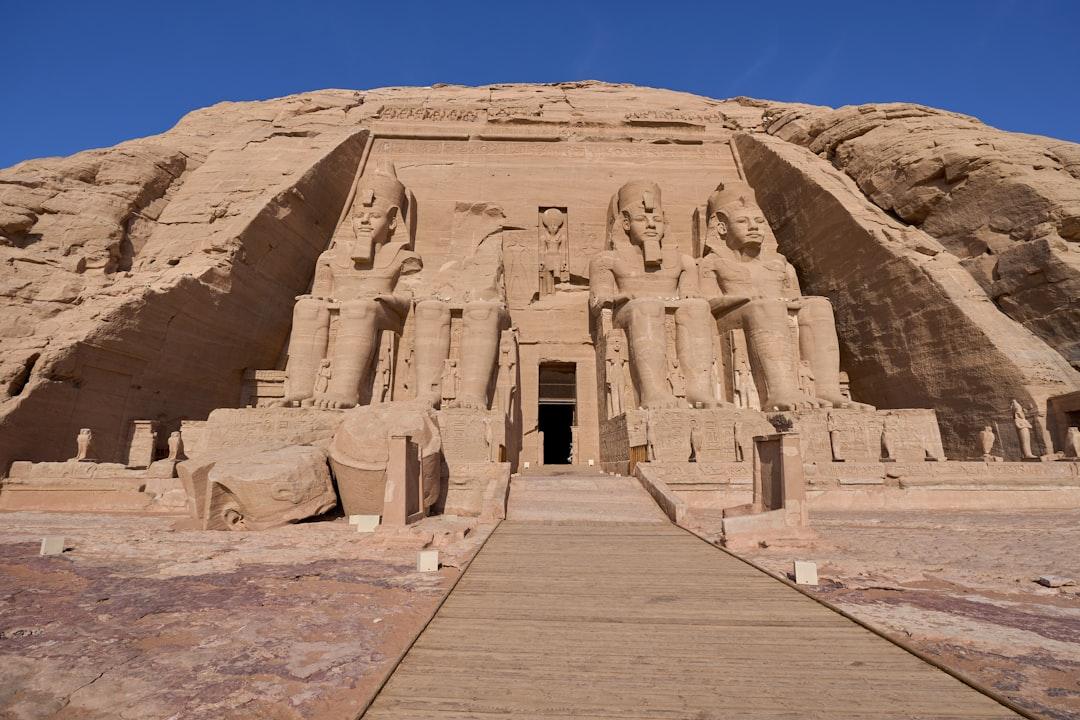
Four colossal statues of Ramesses II, each measuring 20 metres tall, guard the entrance to the Great Temple carved directly into the sandstone cliff. Entry covers both temples on site. Inside, vivid wall carvings depict the Battle of Kadesh and religious scenes that remain well-preserved. Arrive at opening to beat tour groups; the UNESCO rescue operation moved both temples stone by stone in the 1960s to save them from Lake Nasser.
- 08:00
Temple of Hathor and Nefertari
The smaller temple, built by Ramesses II to honor Queen Nefertari, sits 100 metres north of the Great Temple. Six standing colossal figures, alternating between the king and queen, decorate its facade. Combine both temples in a single ticket. Allow 30 to 40 minutes here; the interior carvings are among the best-preserved in Upper Egypt. The combined entry fee across both temples is in the range of EGP 800 for foreign adults, per egymonuments.com — verify at the gate as fees update annually.
- 09:00
Lake Nasser viewpoint and site cafe
After both temples, walk 5 minutes to the Lake Nasser shore directly behind the site. The scale of the lake (550 km long, stretching into Sudan) gives the dam's consequences a physical reality that no map does justice to. The on-site cafe sells tea, soft drinks, and light snacks. Spend 20 to 30 minutes here before the return convoy forms around 09:30 to 10:00.
- 13:00
Return to Aswan and late lunch at El Dokka Restaurant
Back in Aswan by early afternoon. El Dokka Restaurant sits on Eissa Island in the Nile and is reached by a complimentary ferry from the dock near the EgyptAir office in downtown Aswan. The restaurant has been operating since 1993 and specializes in Nubian cuisine, including grilled fish, chicken tagine with tahini, and Nubian-style rice dishes. Take the free ferry, order one main and a glass of karkade, and decompress on the river.
- 16:00
Gharb Seheil Nubian Village by motorboat
Hire a motorboat from the Corniche for the 10 to 15-minute crossing to Gharb Seheil on the west bank, about 5 km south of central Aswan. Budget EGP 200 to 350 for a round trip, per semelegantvoyage.com, 2026. The village has brightly painted facades in turquoise, orange, and yellow, a street market selling spices and crafts, and local homes where families serve complimentary hibiscus tea. Sunset visits are cooler and the light is better for photographs, per egyptoursplus.com, 2026.
Best things to do in Aswan
Abu Simbel Temples
Two rock-cut temples built by Ramesses II around 1264 BC sit on the western shore of Lake Nasser, 280 km south of Aswan. Entry is approximately EGP 822 per adult (per the official Egyptian monuments portal, verified July 2026); card payment only. Most visitors do a long day trip by road, about 3.5 hours each way, or take a short domestic flight from Aswan Airport. Aim to arrive before 08:00 to beat the tour convoys. Allow 1.5 to 2.5 hours on site.
~EGP 822 per adultView on map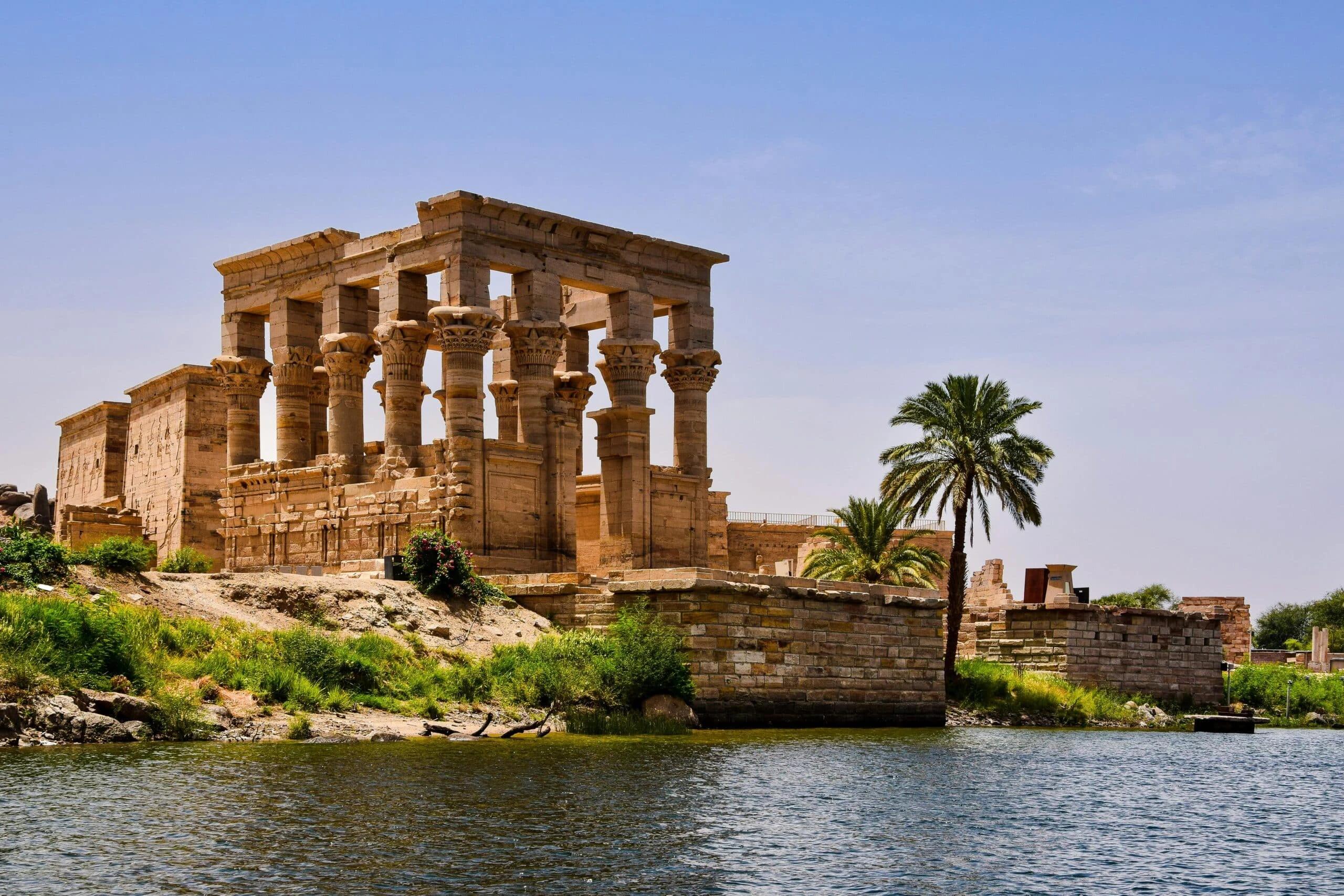
Philae Temple (Temple of Isis), Agilkia Island
Dedicated to the goddess Isis, this temple complex was relocated stone by stone to Agilkia Island before the High Dam flooded its original home, one of UNESCO's most celebrated rescue operations. Entry is EGP 550 per adult; the site is open 07:00 to 16:00 daily (per timetravelturtle.com, June 2026). Reach it by motorboat from the Shellal landing stage, a 10-minute ride. Return after dark for the sound-and-light show, which runs most evenings and adds dramatic narration to the illuminated ruins.
EGP 550 per adultView on map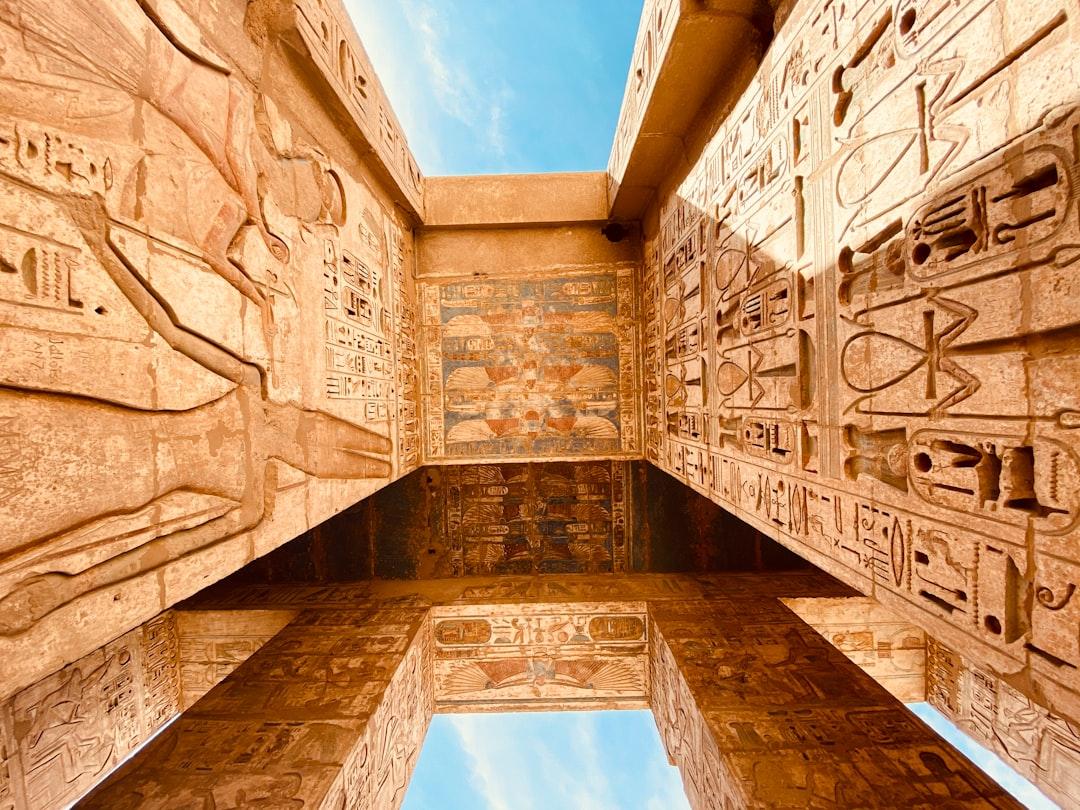
Nubian Museum
Widely regarded as one of the best-curated museums in Egypt, the Nubian Museum traces 5,000 years of Nubian history and culture, much of it saved from sites submerged by Lake Nasser. Entry is EGP 400 per adult; opening hours are 09:00 to 17:00 daily, with extended evening hours (18:00 to 21:00) on Thursdays and Fridays (per timetravelturtle.com, June 2026). Students with a valid ISIC card pay 50 percent. Budget 90 to 120 minutes for a thorough visit.
EGP 400 per adultView on map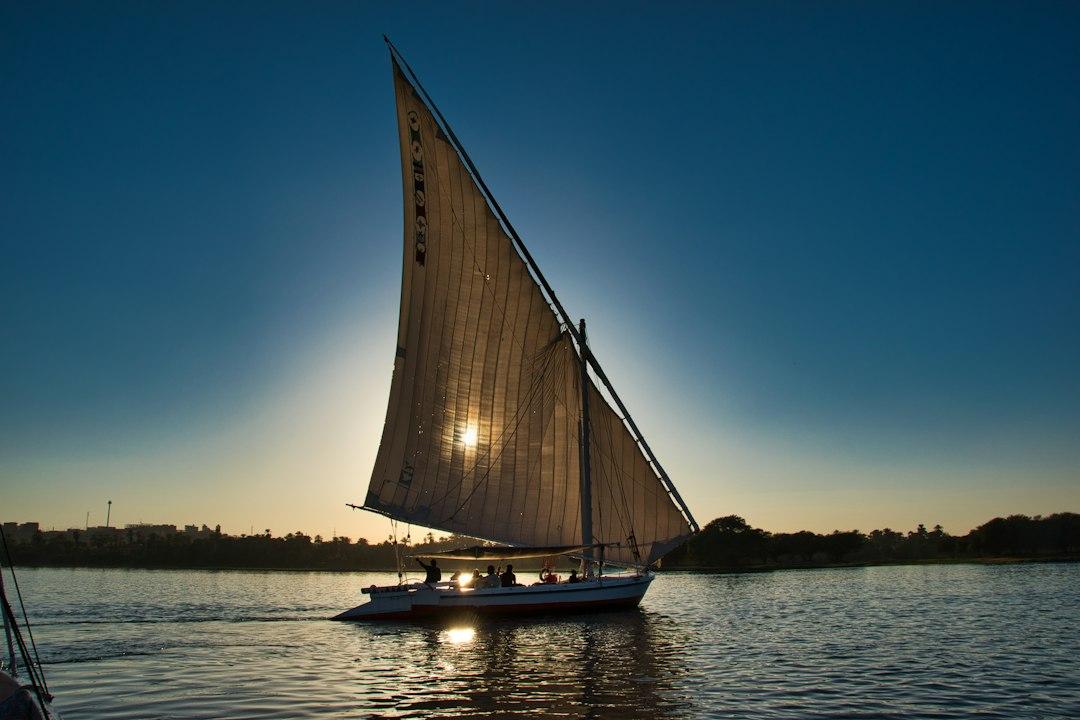
Felucca Ride to Elephantine Island and Nubian Villages
Felucca sailboats depart from Aswan's Corniche and reach Elephantine Island in about 20 minutes. The island has been continuously settled since the 1st Dynasty, around 3100 BC, and holds the ruins of the Temple of Khnum, a small museum (EGP 150 entry), and the Nilometer. From there, boats continue to Sohail Island's Nubian villages, where colorfully painted homes and craft workshops offer 30-minute to 2-hour sessions in basket weaving, pottery, and henna. Felucca hire runs approximately EGP 400 to 600.
EGP 400-600 felucca + EGP 150 museumView on map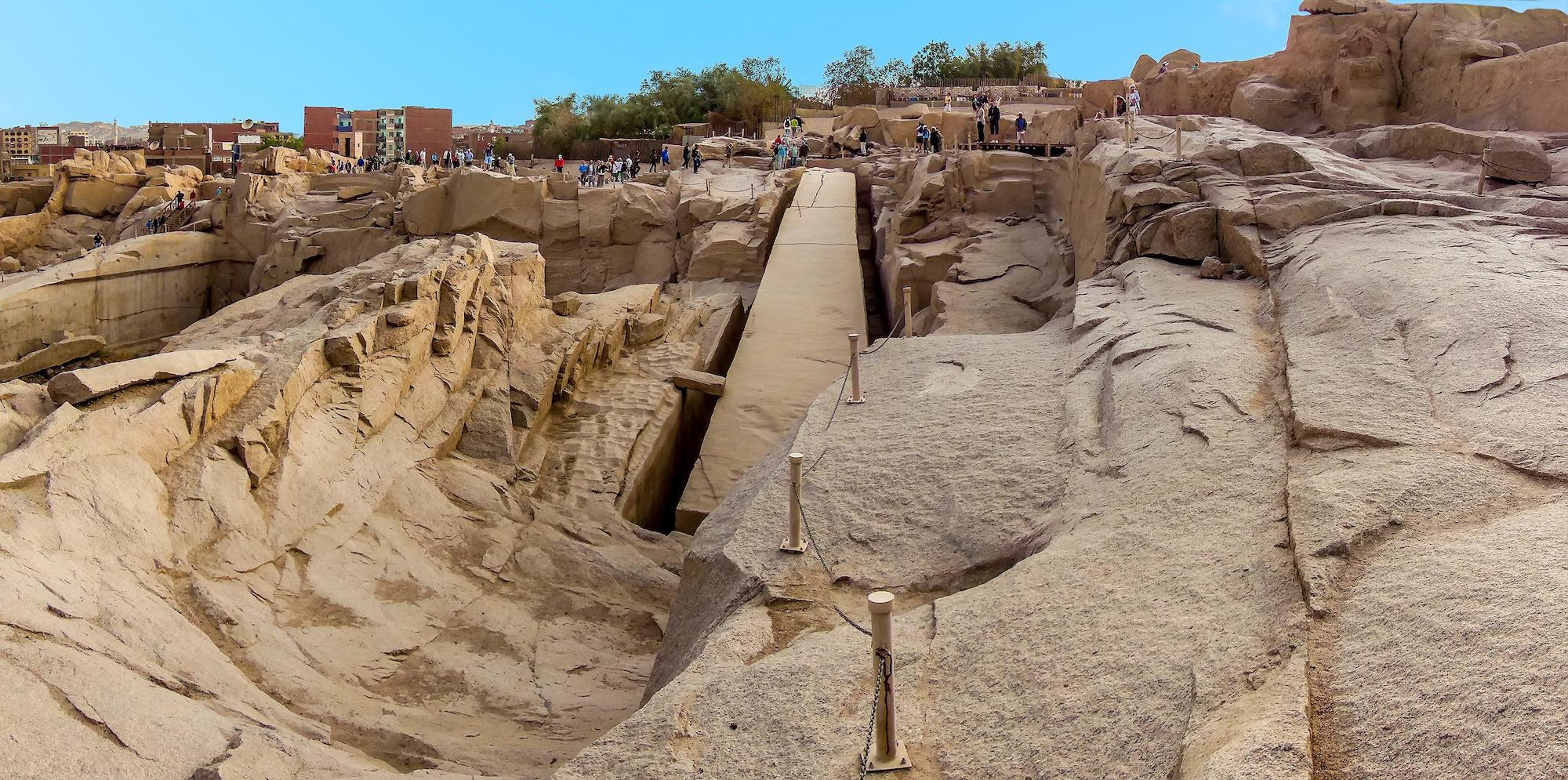
Unfinished Obelisk, Aswan Quarries
Left in place after a crack appeared during carving, this granite obelisk would have weighed 1,197 tons and stood as the largest of the ancient world. Seeing it still attached to the bedrock makes it the clearest surviving illustration of pharaonic quarrying techniques anywhere in Egypt. Entry is EGP 220 per adult; the site is open daily 07:00 to 16:00 (per timetravelturtle.com, June 2026). About 15 minutes by taxi from central Aswan. Combine with the Aswan High Dam on the same half-day.
EGP 220 per adultView on map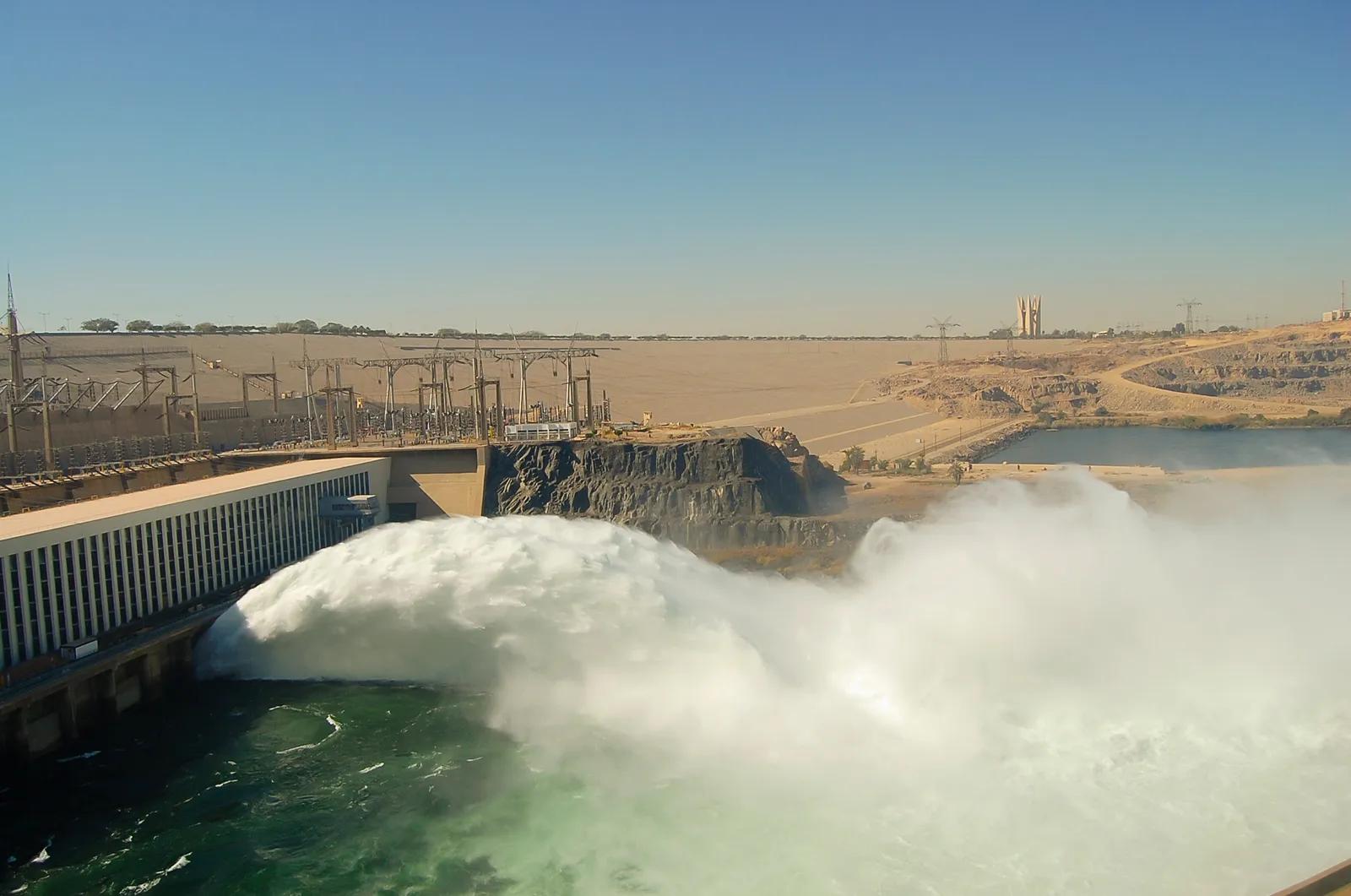
Aswan High Dam
Completed in 1971 and stretching roughly 3.8 km across the Nile, the High Dam created Lake Nasser and transformed Egypt's agricultural system. Entry is approximately EGP 200 for foreign visitors; 30 to 60 minutes is enough time at the crest viewpoint (per nilecruisesinegypt.com, July 2026). The dam is 15 to 20 minutes from central Aswan by taxi. There is no visitor center, just an open crest with panoramic views of the lake and surrounding desert. Pair with Philae Temple on the same half-day loop.
~EGP 200 per adultView on map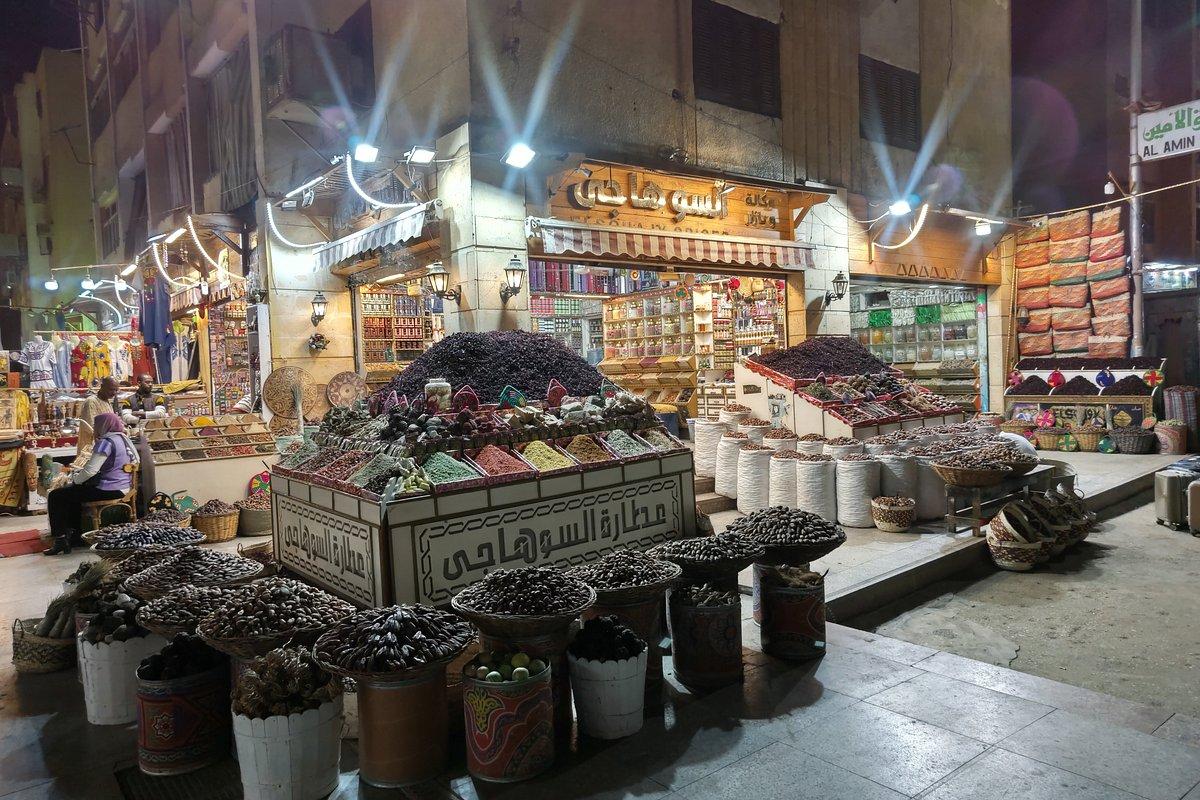
Aswan Souk (Sharia as-Souq)
Aswan's covered market runs for 3 km parallel to the Nile and stays open roughly 09:00 to 23:00 daily (per semelegantvoyage.com, July 2026). Stalls sell karkade (dried hibiscus), spices, Nubian baskets and jewelry, galabiyyas, and perfumed oils. Entry is free. Starting prices are typically 3 to 5 times the fair value, so negotiate firmly; aiming for 20 to 25 percent of the first asking price is a reasonable starting position. Most archaeological sites across Egypt now require card payment, but the souk remains cash-friendly.
Free entryView on map
Frequently Asked Questions
Is Aswan safe to visit in winter 2027?
When is the best time to visit Aswan?
Cash or can I pay by card?
How much should I tip in Aswan?
How do I get to Aswan and get around once I'm there?
Find hotels in Aswan
Browse curated stays from the Corniche to Elephantine Island, with real prices and human support when you need it. Book now and wake up to felucca sails on the Nile during Aswan's peak winter season, December through February.
Search hotels