Nile Cruise from Luxor to Aswan 2027 What to Know Before Booking
Pick the right ship, duration, and cabin for Luxor to Aswan before you book. Covers 4- and 5-day itineraries, key temples, and price tiers in EGP.
Quick answer
A Nile cruise from Luxor to Aswan is a one-way river journey of 215 kilometres through Upper Egypt, covering Karnak, the Valley of the Kings, Edfu, Kom Ombo, and Philae in 4 or 5 days; cabin, full-board meals, and an Egyptologist guide are usually included, but entrance tickets and drinks often cost extra. Plan to travel between October and April, when daytime temperatures stay around 20 to 28 degrees Celsius; summers regularly reach 45 degrees Celsius, making long temple walks uncomfortable. The sections below cover how to pick the right ship type, duration, cabin, and the smartest time to book for 2027.
What a Nile cruise from Luxor to Aswan actually is
A Nile cruise from Luxor to Aswan is a river voyage through Upper Egypt, covering roughly 215 kilometers of the Nile between two of ancient Egypt's most important cities. The ship is your hotel for the whole trip: you board once, sleep in the same cabin each night, and the vessel moves you between temple stops while you eat, rest, or watch the riverbanks pass from the deck.
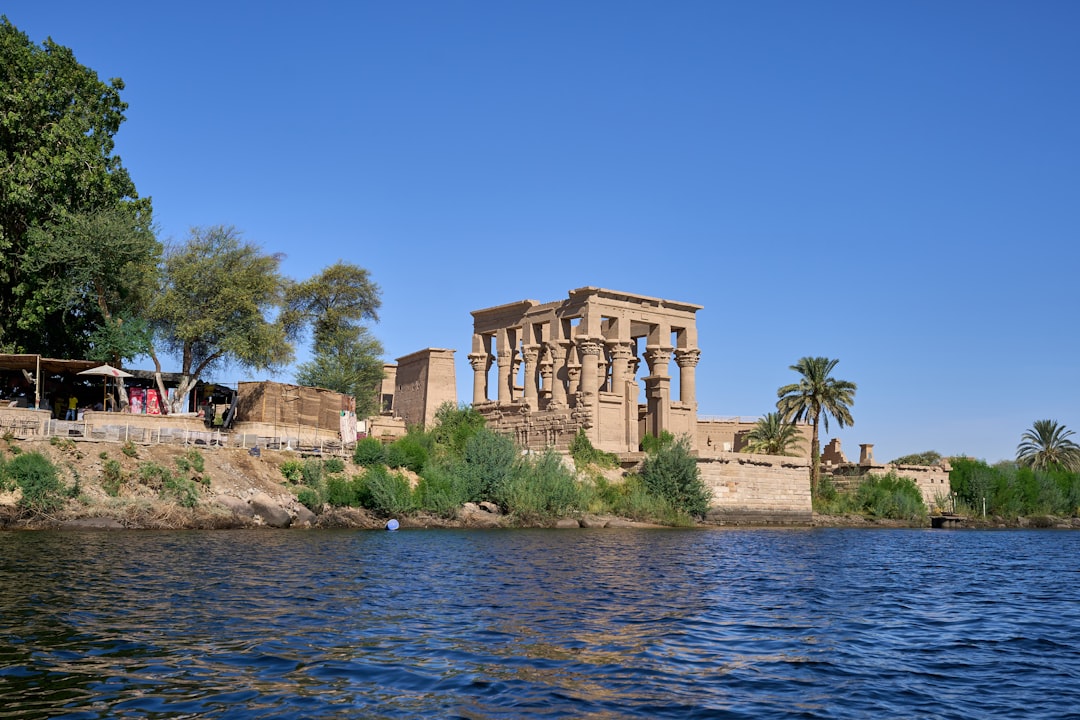
Most packages run 4 or 5 days. The standard route stops at five sites: Karnak and Luxor Temple at the start, the Esna Lock mid-route, the Temple of Horus at Edfu, the double-temple complex at Kom Ombo, and Philae Temple in Aswan at the end. A standard package includes full-board meals and cabin accommodation; guided excursions and entrance tickets may or may not be included depending on the operator, so check the itemised list before booking.
The cruise runs in both directions. Luxor to Aswan goes upstream (south) and typically takes 4 to 5 days; Aswan to Luxor goes downstream (north) and can be done in 4 days. The format suits first-time visitors to Egypt because it removes intercity logistics entirely: no booking separate trains, no switching hotels between temple cities.
How to plan and book your Nile cruise from Luxor to Aswan, step by step
The full planning process takes most travelers two to four hours spread across a few days. Have your passport, travel dates, and a rough budget figure ready before you start.
- Choose your duration. Input: your available holiday days. Output: a shortlist of itinerary lengths. The two standard options are 4 days / 3 nights (Aswan-to-Luxor, faster pace) and 5 days / 4 nights (Luxor-to-Aswan, one extra day of sightseeing at Edfu or Kom Ombo). Both cover Karnak, Luxor Temple, the Valley of the Kings, Edfu, Kom Ombo, and Philae. If you have fewer than four days total, the 3-night option starting from Aswan is your only realistic choice.
- Pick your ship category. Input: your comfort and budget priorities. Output: a filtered list of vessels. Standard motor ships run roughly EGP 22,000 to EGP 32,000 per person (4 nights, twin-share); deluxe ships run EGP 39,000 to EGP 60,000; luxury and boutique dahabiyas start from EGP 60,000 and above. Cabin position matters: upper-deck cabins with Nile-facing windows cost more than lower-deck interior rooms on the same ship.
- Compare inclusions, not just price. Input: two or three operator quotes. Output: a like-for-like comparison. Confirm whether the price covers full-board meals, an Egyptologist guide for shore visits, temple entrance fees, and port transfers. Abu Simbel is not included in most packages and costs extra separately.
- Request a quote and confirm dates. Input: your passport details, group size, and chosen departure date. Output: a written quote valid for 48 to 72 hours. Peak season sailings (December to January) sell out 4 to 6 months ahead; October-to-April high-season dates need 6 to 10 weeks lead time.
- Pay a deposit to hold your cabin. Input: the quote and a payment method. Output: a booking confirmation with your cabin number and itinerary PDF. Most operators require a deposit of 25 to 30 percent of the total to confirm the reservation.
- Settle the balance and collect travel documents. Input: remaining balance (paid by the operator's stated deadline, typically 30 to 60 days before departure). Output: a mobile or printed voucher showing your boarding point in Luxor, check-in time, and emergency contact number for the ship.
Bring small EGP notes on board. Temple guardian tips run EGP 10 to EGP 20 per interaction, and the ship crew tip is usually collected in a single envelope at the end of the cruise.
Common mistakes to avoid when booking a Nile cruise
Most booking problems on Luxor-to-Aswan cruises come down to a few avoidable misreads of what the package actually covers. Check each one before you pay a deposit.
- Treating the headline price as all-in. Most standard packages include the cabin and full-board meals, but drinks beyond water, tea, and coffee are charged separately at the ship bar. Entrance fees and guide arrangements also vary by operator. Before signing, ask for a written line-by-line breakdown of exactly what is and is not included.
- Assuming Abu Simbel is part of the cruise. Abu Simbel sits beside Lake Nasser, south of the Aswan High Dam, so cruise ships cannot reach it. It is almost always a separate road or flight excursion booked from Aswan. Confirm this with your operator before the cruise ends and budget extra time in Aswan to fit it in.
- Booking in summer without planning for the heat. Daytime temperatures in Luxor and Aswan regularly exceed 40°C (104°F) from June through August. Most site visits happen outdoors. The most comfortable travel window is October through April, when daytime temperatures typically stay between 20°C and 28°C.
- Choosing a cabin by star rating alone. Cabins on lower decks near the engine room can be noisy; cabins at the waterline offer little to no view. Request a mid-ship cabin on a higher deck and confirm the exact cabin position in writing when you book.
- Booking too late in peak season. Ships fill quickly from November through March. Booking 2 to 3 months ahead is advisable for standard cruises; luxury vessels and dahabiyas often sell out earlier. Last-minute availability is limited and prices are higher.