5 Traditional Moroccan Foods You Need to Try
From slow-cooked tagine and Friday couscous to sweet-savory pastilla, discover five traditional Moroccan dishes, their signature flavors, and where to try them during your trip.
Quick answer
Five traditional Moroccan foods to try are tagine, a slow-cooked stew of meat or vegetables; couscous, steamed semolina served with vegetables and broth; pastilla, a flaky pastry with a sweet-and-savory filling; harira, a tomato-based soup with lentils and chickpeas; and rfissa, a comforting dish of chicken, lentils, and shredded Moroccan flatbread. Try them at local restaurants and traditional eateries to experience the variety of Moroccan cuisine, from everyday meals to dishes served on special occasions.
5 Traditional Moroccan Foods You Need to Try, Ranked by Must-Eat Appeal
Tagine
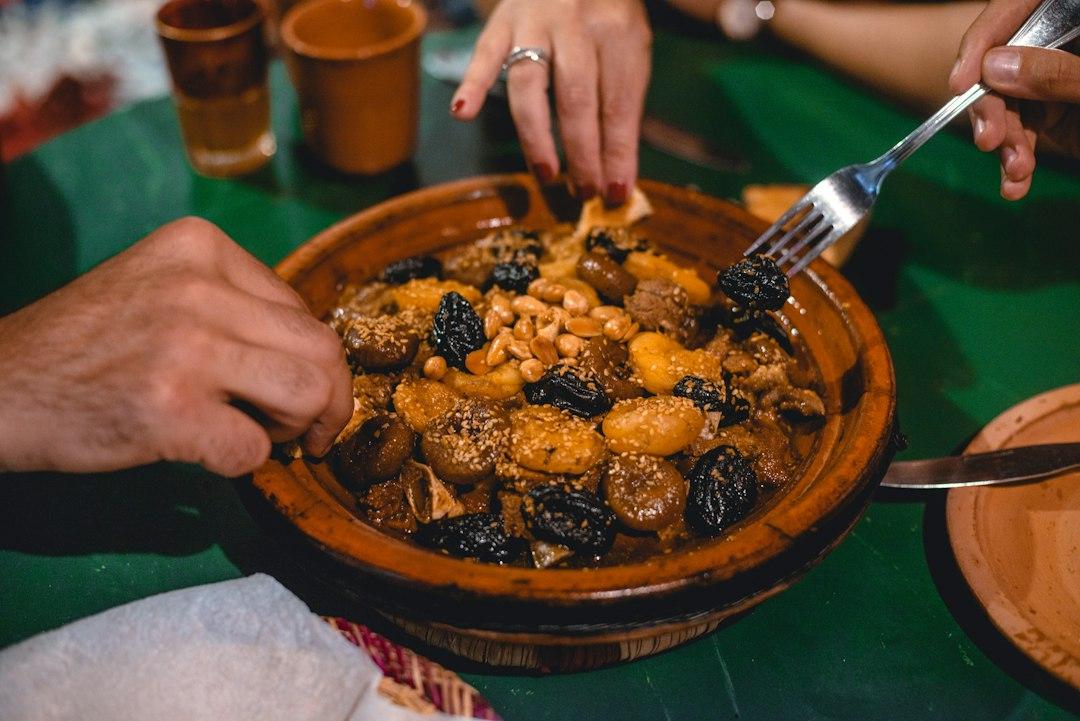
Tagine is Morocco's most iconic dish and the best starting point for any first-time visitor. Slow-cooked meat, poultry, or vegetables simmer for hours inside a conical clay pot, building a rich, deeply spiced sauce you soak up with khobz bread. The most celebrated version layers lamb with prunes and almonds, seasoned with ras el hanout, saffron, and cinnamon. Chicken tagine adds preserved lemon and olives for a salty-tangy finish. At a local restaurant in Marrakech, budget roughly 80–150 MAD per tagine at a sit-down spot; tourist-facing stalls near Jemaa el-Fna price around 30–60 MAD, but quality varies sharply. Al Fassia in Gueliz, a women-run Marrakech institution, runs 250–400 MAD per person for the full spread.
Best for: first-timers and families.80–150 MAD at a local restaurant (verify in EGP at cbe.org.eg)View on map
Couscous
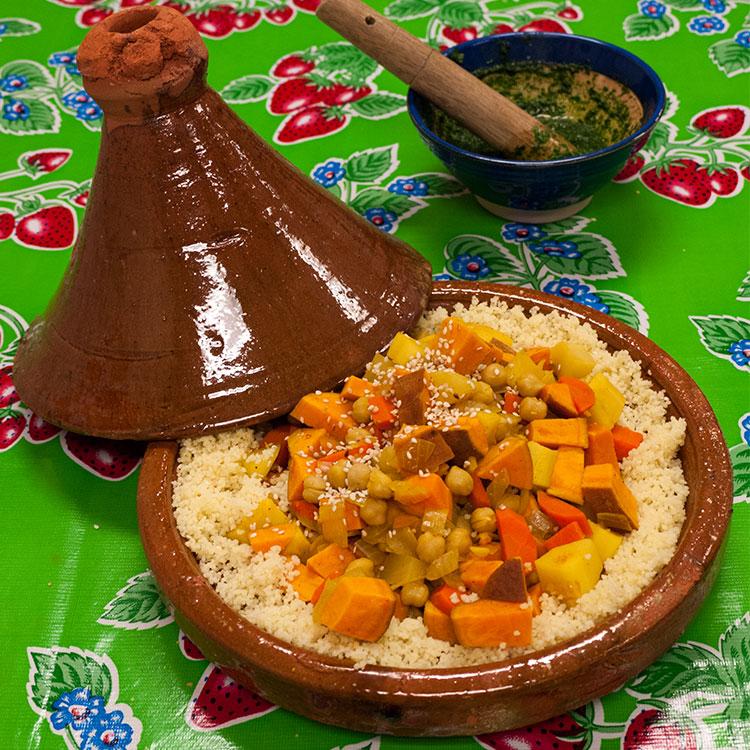
Couscous is Morocco's national dish and is eaten as a communal Friday tradition after midday prayer, per multiple culinary sources and food researchers documenting the practice in 2026. The base is steamed semolina wheat worked by hand until light and airy, then piled high with a slow-simmered broth of lamb or beef, chickpeas, and up to 7 seasonal vegetables — a number considered lucky in Moroccan culture. Turnips, zucchini, pumpkin, carrots, and cabbage are typical; a spoonful of smen (fermented salted butter) stirred in at the end adds a distinctive depth. Expect to pay roughly 40–60 MAD at a casual Friday restaurant. Egyptian travelers will recognize the semolina base from North African cooking, but the 7-vegetable broth technique is distinctly Moroccan.
Best for: cultural immersion.40–60 MAD at a casual restaurant (verify in EGP at cbe.org.eg)View on map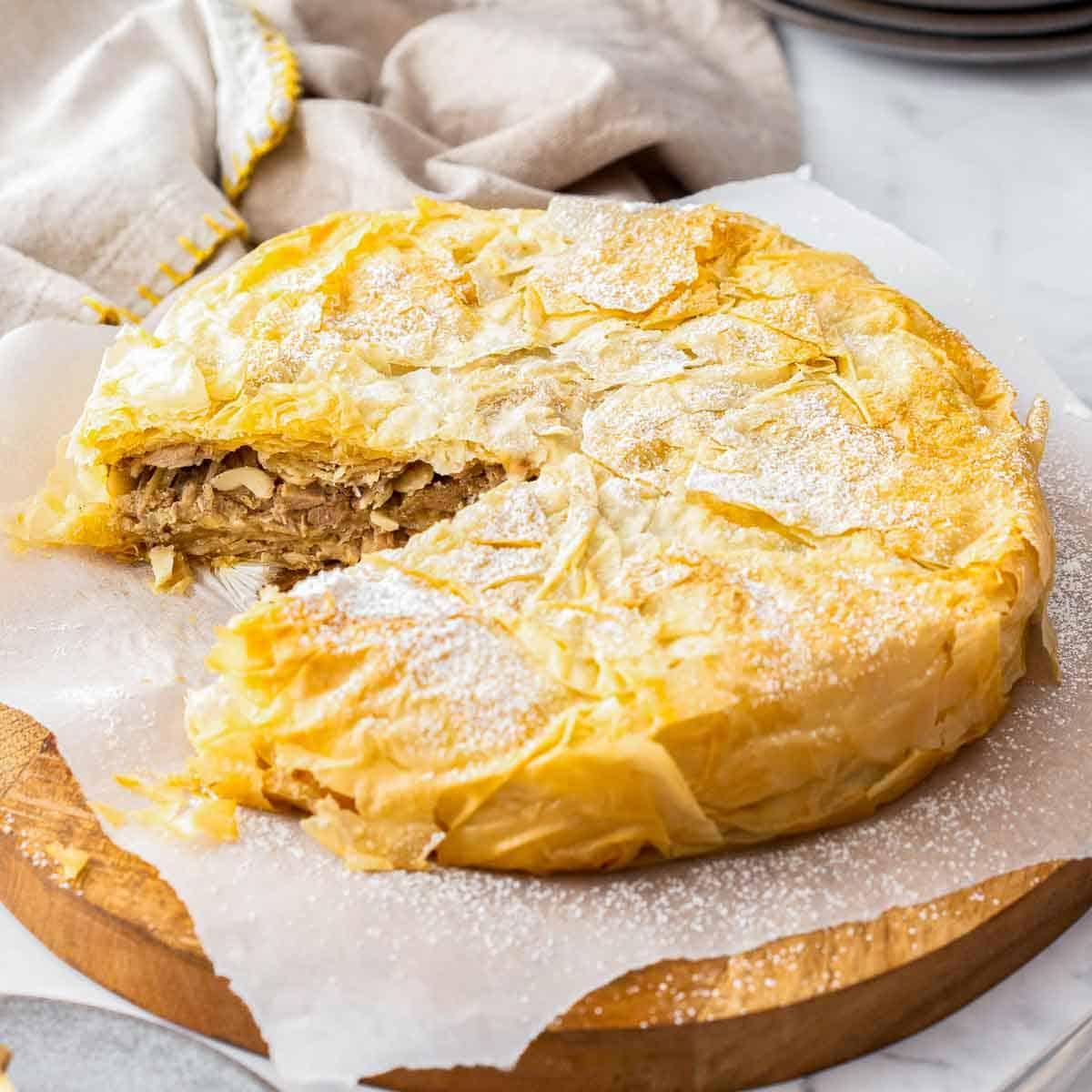
Pastilla (Bastilla)
Pastilla is one of the most technically ambitious dishes in Moroccan cuisine, tracing its roots to medieval Al-Andalus when Moorish refugees brought the recipe to Fez. Shredded chicken or pigeon is slow-cooked with saffron, ginger, and cinnamon, then layered with scrambled eggs and toasted almonds inside tissue-thin warqa pastry (similar to filo), baked golden, and dusted with powdered sugar and cinnamon. That sweet-savory contrast is the whole point. Traditional pigeon pastilla appears at high-end restaurants and celebrations; chicken versions are more common and lighter. In Fez, widely regarded as the dish's spiritual home, expect to pay roughly 50–80 MAD at a specialist restaurant. Dar Yacout in Marrakech serves it as part of a set dinner running 400–600 MAD per person.
Best for: food lovers wanting a showstopper dish.50–80 MAD at a Fez restaurant (verify in EGP at cbe.org.eg)View on map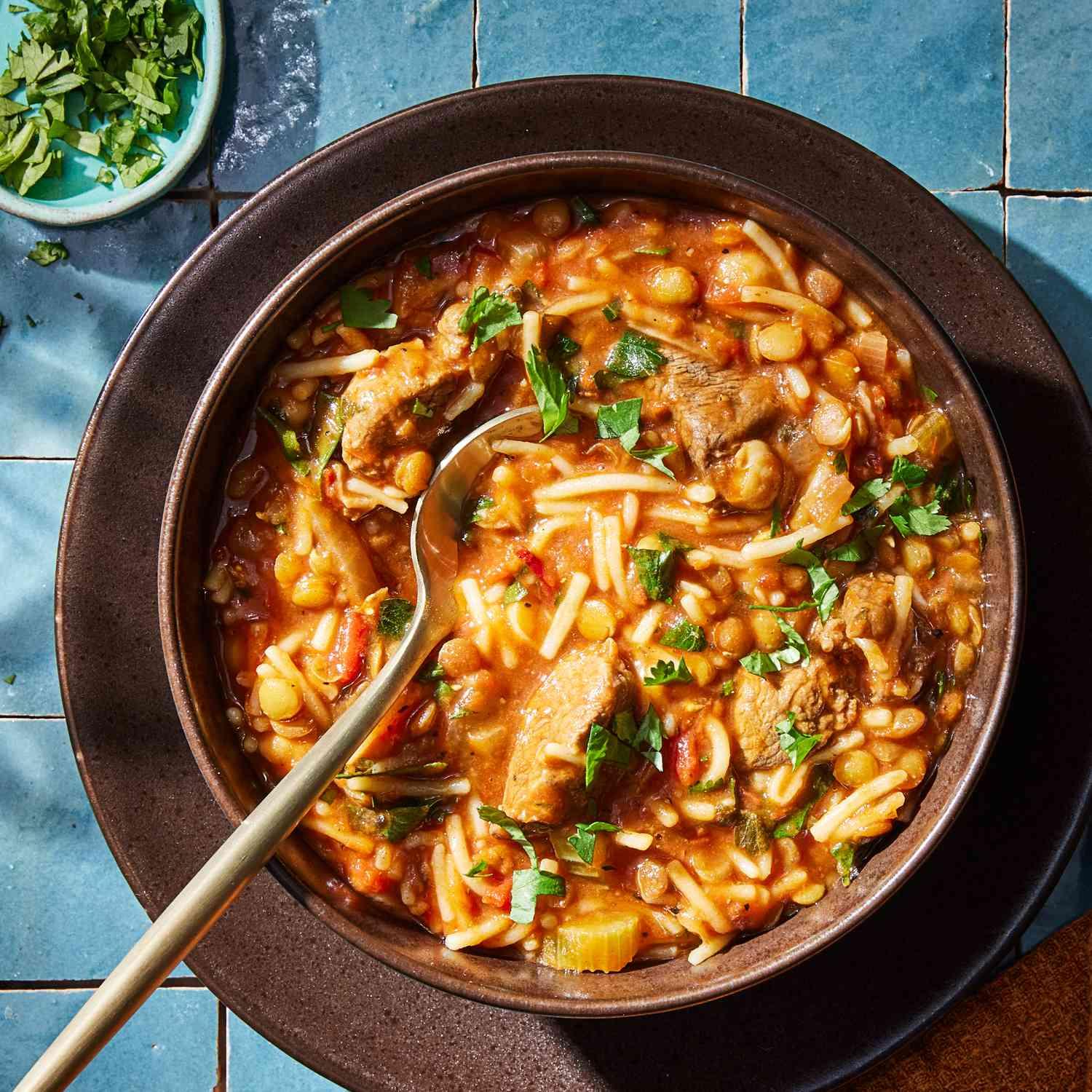
Harira
Harira is Morocco's everyday soup and the classic iftar opener during Ramadan making it immediately familiar to Egyptian travelers who also break fast with warming soups. The base is crushed tomatoes and tomato paste, thickened with a flour slurry, then loaded with lentils, chickpeas, lamb or beef, and a big handful of fresh cilantro and parsley. Warm spices, ginger, cinnamon, turmeric, and black pepper, give it a rounded heat without sharpness. Vermicelli or rice noodles go in near the end for body. A bowl at a street stall or local café costs roughly 10–20 MAD. Moroccans serve it alongside dates and chebakia (a sesame-honey pastry) during Ramadan. It is available year-round and is one of the easiest, most affordable entry points into traditional Moroccan foods.
Best for: budget travelers and Ramadan visitors.10–20 MAD per bowl (verify in EGP at cbe.org.eg)View on map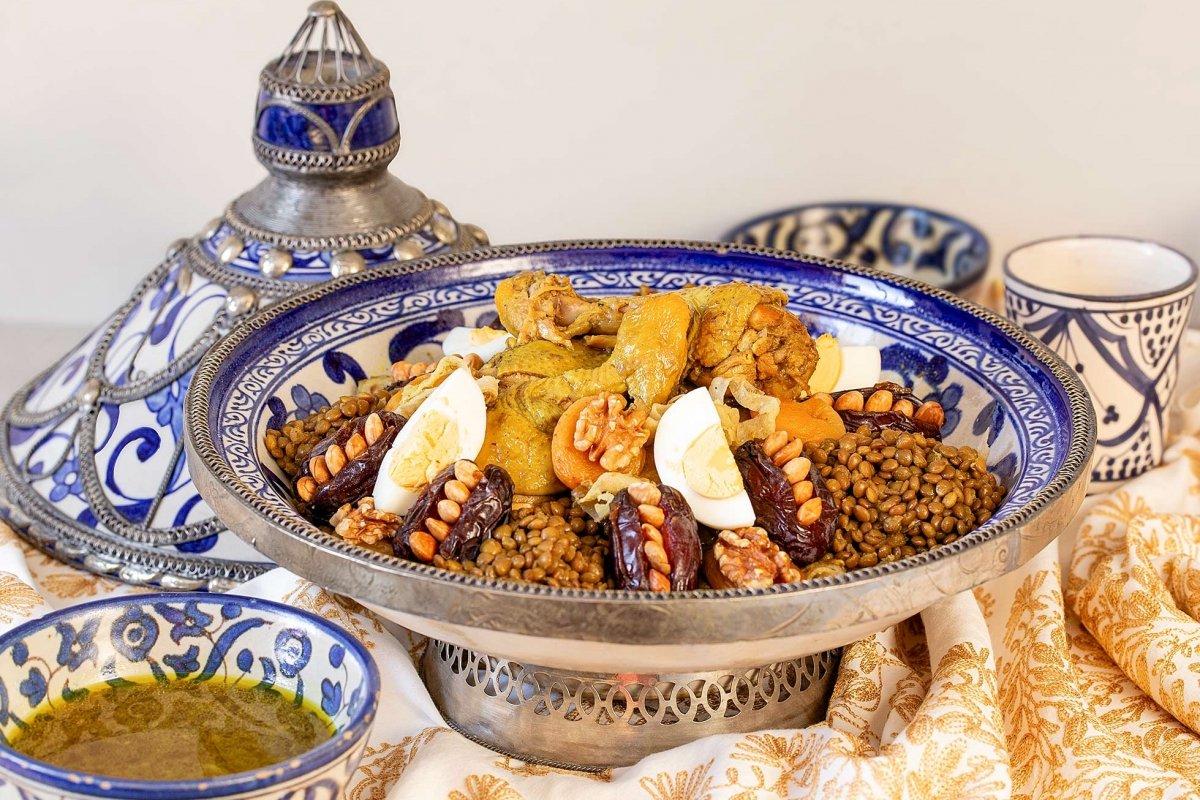
Rfissa
Rfissa is the least-known of these 5 traditional Moroccan foods outside Morocco, but one of the most culturally rooted. The dish is traditionally prepared on the first Thursday after a birth, served to the new mother and shared with neighbors as a celebration, per ryo.co (2026). It layers torn msemmen (a layered Moroccan flatbread, similar to rghaif) under a slow-cooked chicken broth built with lentils, ras el hanout (a complex spice blend of more than 10 spices), and fenugreek seeds, a seed known in traditional Moroccan medicine for supporting postpartum recovery. The result is earthy, warmly spiced, and deeply satisfying. Rfissa rarely appears on tourist menus; Chez Elle in Marrakech near Majorelle gardens serves it at around 40 MAD per dish. For a more formal setting, large guesthouses in Fez offering reservation-only dinners are the most reliable option.
Best for: adventurous eaters wanting an authentic, home-style experience.~40 MAD at Chez Elle, Marrakech (verify in EGP at cbe.org.eg)View on map